Aftermarket strategyNovember 12, 20265 min read
Build vs. Buy: The Real Decision Behind Your Aftermarket Platform
PRPavan R
Build or buy aftermarket software? Where each path wins for industrial OEMs, what it really costs, and how to choose in one working session.
Table of contents
Bring us one representative machine. We will show you the aftermarket opportunity.
Build or buy aftermarket software? Build only if the software itself is your differentiator, as with Tesla. In aftermarket, what sets an OEM apart is uptime guarantees, service contracts, and parts availability, not the ERP, CRM, or portals. Buy software built for aftermarket, and put your engineers into the machine and the service promise.
Build or buy aftermarket software: why it matters
Aftermarket revenue keeps growing, and it carries the margin the rest of the business depends on. The systems behind it are still spreadsheets, a legacy ERP module, and tools the service team improvised years ago. Sooner or later someone asks whether to build or buy aftermarket software.
The stakes are real. McKinsey found aftermarket services earn an average EBIT margin of 25 percent, against 10 percent for new equipment (McKinsey, 2017). BCG’s 2025 benchmark of roughly 100 machinery companies found that those prioritizing services earn one-third or more of their income from them (BCG, 2025). The platform decides which of those margins you can actually manage.
Build or buy aftermarket software: when building wins
When you build or buy aftermarket software, building wins only when the software is the product. Tesla is the clearest example. Its 2019 annual report says it develops almost all of its vehicle control and infotainment software, including most of the user interfaces, in house (Tesla 10-K, 2019). The same filing says its vehicles upload data wirelessly, so Tesla can diagnose and remedy many problems before anyone looks at the car.
Tesla also runs its own service. It says this lets it find problems, fix them, and plan service parts inventory faster than traditional automakers. The software is the core of the product, so owning it is the strategy.
Almost no industrial OEM is in that position. A compressor, a crane, or a packaging line is chosen for its reliability and the service promise behind it, not for the portal that orders its parts. Building your own ERP, CRM, or customer portal spends scarce engineers on software that no customer buys. We make the wider case in Build the Machine, Rent the Plumbing.
Build or buy aftermarket software? Where generic software falls short
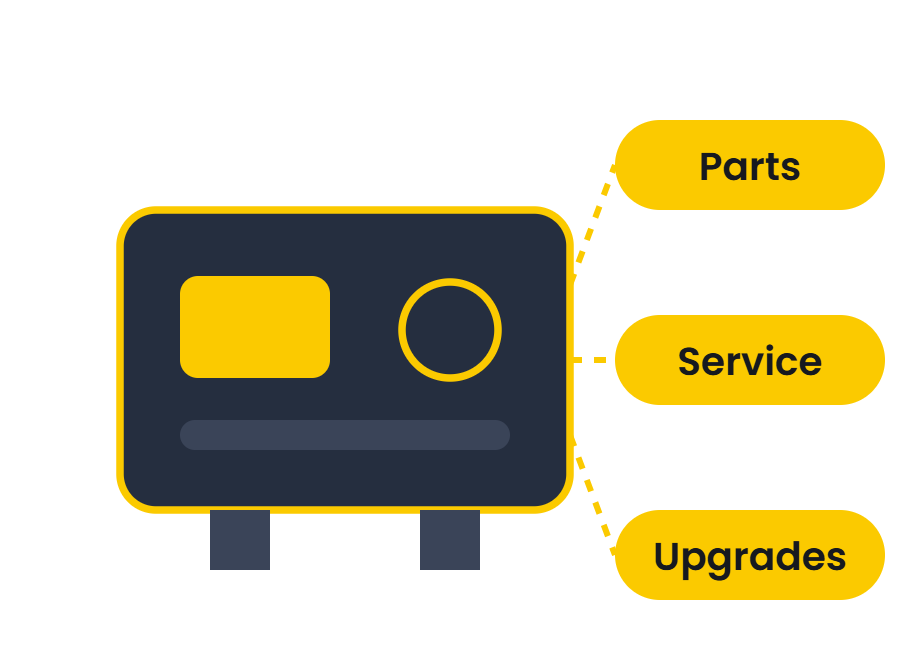
In aftermarket, what sets an OEM apart is the promise: uptime guarantees, service contracts, and parts availability. ERP, CRM, dealer portals, customer portals, and parts portals are only the channels for that promise. Generic versions fall short because each promise depends on knowing the individual machine, and they are built around accounts, orders, and tickets.
- Uptime guarantees. You cannot guarantee uptime on a machine you cannot identify. BCG found that for some machinery companies, weak service results trace back to missing information on installed equipment: condition, location, usage, and service history.
- Service contracts. McKinsey notes that many OEMs lose aftermarket business once warranties and initial contracts expire. A CRM tracks accounts, not which machines just left coverage.
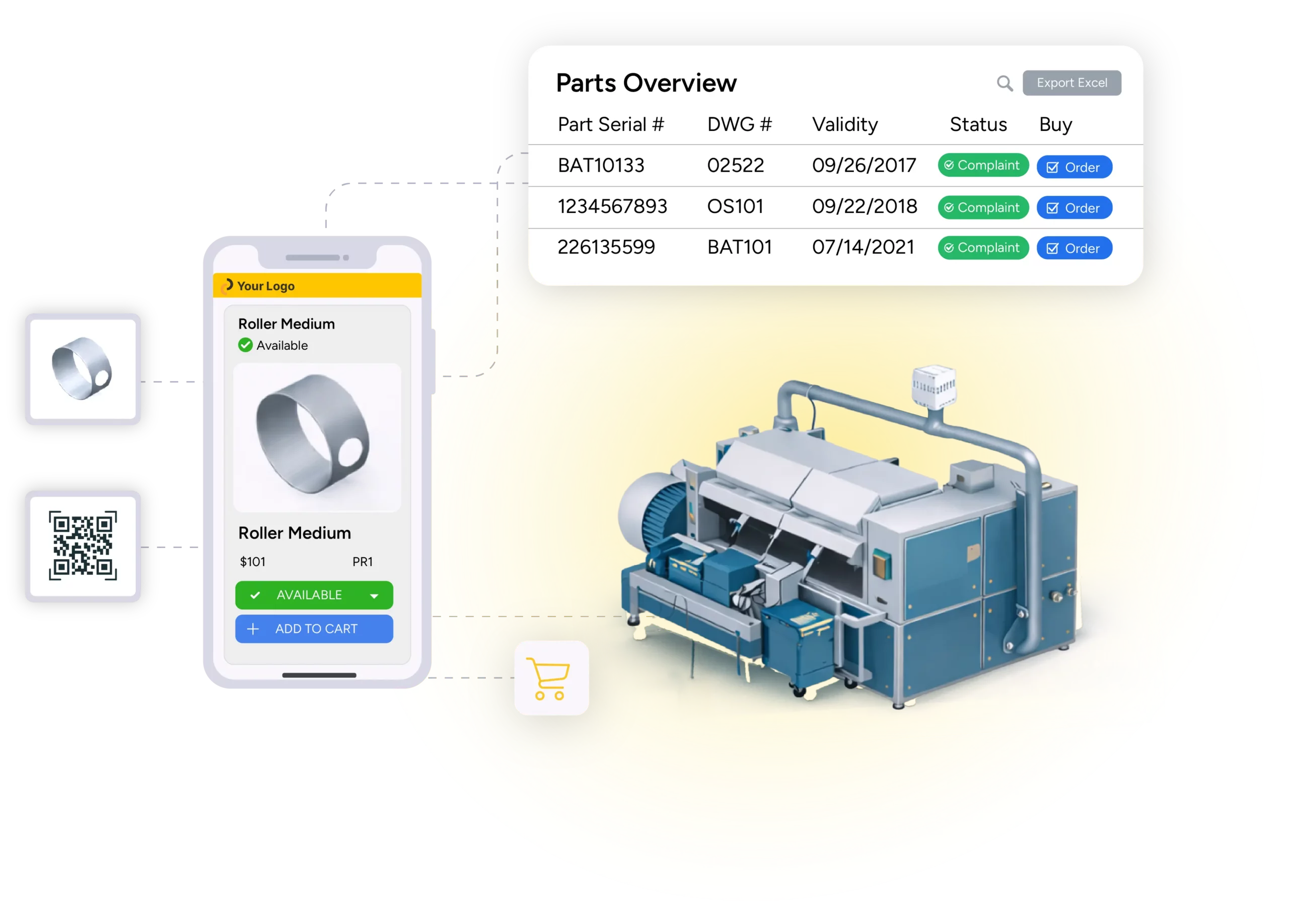
- Parts availability. Quoting the right part needs the serial number and the configuration, which a generic parts portal and an ERP rarely hold together.
The portal is not the differentiator. Every competitor can license the same generic portal. The machine-level data behind it is what sets you apart.
Build or buy aftermarket software: a third path
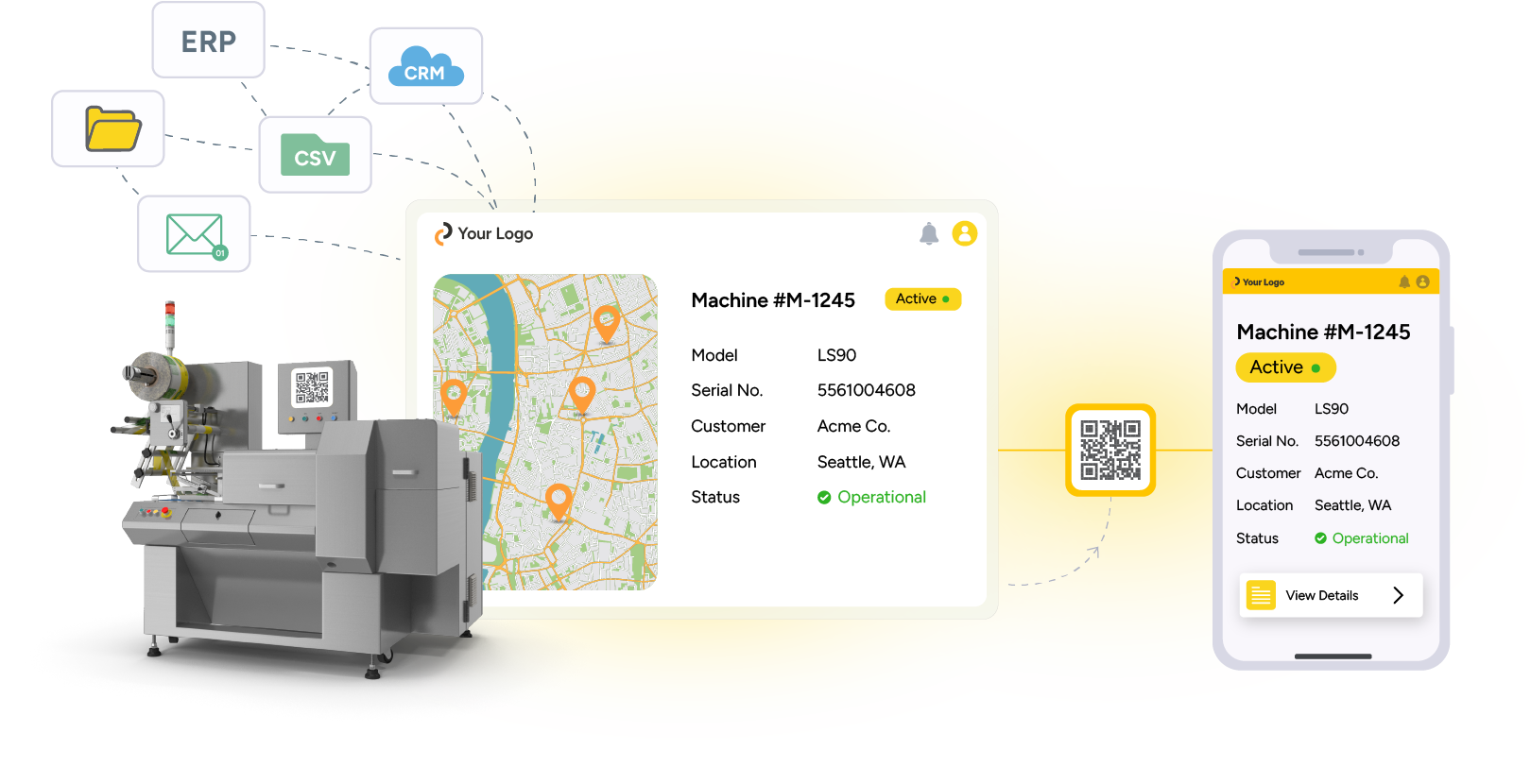
The third option when you build or buy aftermarket software starts from the machine, not the account. It connects to the ERP, CRM, and PLM you already run and extends through APIs, so your engineers stay on the machine and the service promise.
| Build in-house | Generic software | Purpose-built, connected | |
|---|---|---|---|
| Time to first value | 12 to 24+ months (estimate) | Varies by vendor | Two-week onboarding plan (Industrility) |
| Fit to your machines | Unlimited, at full cost | Limited to vendor settings | Configured per machine and product line |
| ERP, PLM, CRM integration | As deep as you build | Often shallow | API-based, no rip and replace |
| Ongoing R&D burden | Entirely yours | Vendor’s | Vendor’s |
| Best suited to | Software or algorithms that are the differentiator, as at Tesla | A narrow, single-function need | OEMs with installed base data spread across ERP, CRM, and spreadsheets |
Industrility is built for this path: a layer on top of your ERP, with 100+ integrations, an open REST API and SDK, and Installed Base Intelligence that unifies ERP, CRM, and service data into one record per machine.
What it looks like in practice
If you are weighing whether to build or buy aftermarket software, two OEM stories show what a purpose-built, connected platform can do. PDC Machines ran its aftermarket for 2,000+ compressors on spreadsheets, USB drives, and email. After launching a white-labeled customer portal, it reports service and spare parts revenue up 50 percent annually. The full story is in the PDC Machines case study.
Astec’s MyAstec portal shows the speed. At CONEXPO-CON/AGG 2026, a customer’s plant was pulled up in 3D, a wear problem in the baghouse was located, and Astec’s engineers proposed a fix. A complete parts quote came back in 36 minutes, and automated follow-up led to the order (Astec’s own account).
See it on your machine
Ask our AI Envoy how this would work for your equipment, or give us one representative machine, with its configuration, BOM, and documentation. We will show you the aftermarket opportunity.
Build or buy aftermarket software: frequently asked questions
Should an OEM build or buy aftermarket software?
Build only if the software or algorithms are themselves your differentiator, as with Tesla’s vehicle software. In aftermarket, the differentiators are uptime guarantees, service contracts, and parts availability, not the ERP, CRM, or portals. Most OEMs are better served by purpose-built software that connects to their existing systems.
How long does it take to implement aftermarket software?
Industrility’s published onboarding plan runs two weeks: kickoff, installed base data import, platform setup, and training. A clean, complete installed base record takes longer, roughly 60 to 90 days for a mid-size fleet, so ask any vendor for a plan built on your own data.
Why not extend the ERP we already have?
An ERP is a system of record. It stores transactions well but does not identify which part fits a specific serial number, track each machine as it changes in the field, or give dealers and customers self-service access. A common approach is to keep the ERP and add a platform that reads from it.
What does waiting another year cost?
Waiting keeps a high-margin part of the business on its weakest systems. BCG found that between a quarter and half of the machinery companies it surveyed struggle to capture service potential, partly from missing installed equipment data. McKinsey documented a 2-point EBIT gain from repricing 100,000 spare parts SKUs.
Want to learn more first? Explore the Industrility aftermarket software platform, read our case studies, learn how to grow aftermarket revenue, or browse more on the Industrility blog.